


08/10/2026
Zoning: Not Every Room Needs to Be Cold at 3pm
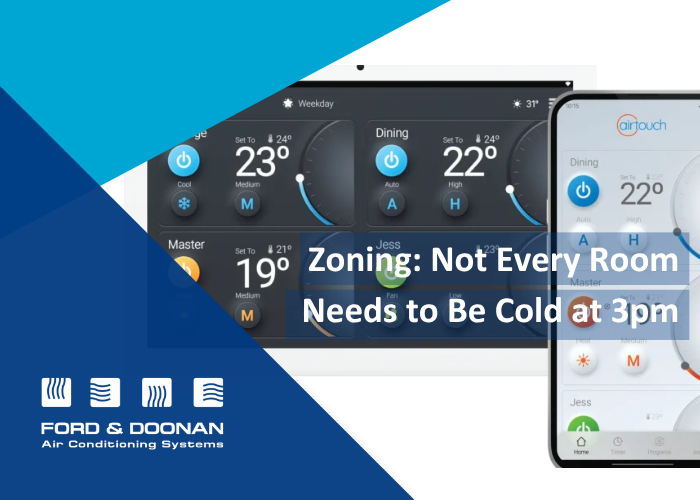
A ducted system doesn’t have to treat every room the same. Here’s how zoning changes the conversation from “on or off” to “on where, and when.”
A whole-house approach to cooling assumes every room deserves equal attention at every hour of the day, which is rarely how a house is actually lived in. Bedrooms sit empty from breakfast until bedtime. A home office might only matter between nine and five. Living areas tend to matter most in the couple of hours after everyone’s home, not before.
A modern ducted system with zoning can direct effort to where it’s actually needed, rather than conditioning the whole house to the same standard regardless of who’s using what. There’s rarely a good reason to cool bedrooms at 3pm if nobody’s sleeping in them yet. There’s plenty of reason to keep a home office comfortable if that’s where the working day is actually happening. And living areas can reasonably wait for their turn closer to when people are walking in the door.

A different question entirely
That’s a genuinely different question from “on or off.” It’s “on where, and when” and it’s one that a lot of older, single-zone systems were simply never built to answer. A single-zone system is an all-or-nothing proposition: the whole ducted network runs together, or none of it does. Zoning turns that into a set of smaller decisions, made room by room rather than for the house as a whole.
It’s worth being clear-eyed about what zoning is and isn’t. It doesn’t make a system cheaper to run in absolute terms if you end up conditioning just as many rooms for just as long then the saving comes specifically from not conditioning space nobody’s using. And it doesn’t fix a system that was undersized for the home’s heat load in the first place; it makes better use of the capacity that’s there, rather than creating capacity that isn’t.
NEXT IN THIS SERIES: What “Smart” Actually Means for Your Air Conditioner
 1800 AIR CON
