


08/10/2026
The House Itself Still Does Most of the Work
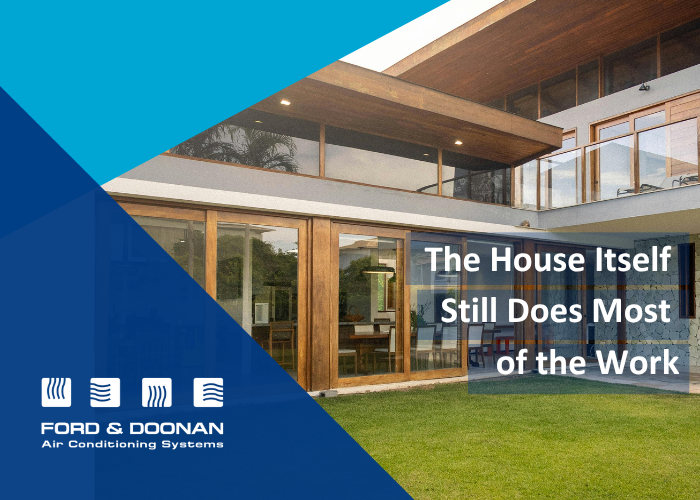
No air conditioner, however smart, fully compensates for a home that wasn’t built with WA’s afternoon sun in mind. Here’s what actually determines how hot a house gets.
It’s easy, to start thinking the air conditioner is the main character in the house. It isn’t, arguably it never has been. The air conditioner is what deals with heat once it’s already inside. Whether that heat gets in, in the first place, is decided by a completely different set of factors – most of which have nothing to do with the aircon at all.

What’s actually deciding how hot a house gets
Insulation, or the lack of it, in the ceiling cavity is usually the single biggest factor, since a hot roof space sits directly above every room in the house all afternoon. Window glazing and orientation matter almost as much: a home with large west-facing windows and no external shading is fighting a battle a well-oriented, well-shaded home never has to have. Blinds, eaves and even the colour of the roof all play a role in how much heat makes it inside before the air conditioner is ever switched on.
None of this is a reason to feel bad about an older home, most established WA suburbs were built before these things were well understood, and retrofitting insulation or shading is a genuinely reasonable project in its own right, entirely separate from anything to do with the air conditioning system.
It is, though, a reason to be realistic about what technology can and can’t fix. A well-insulated, well-shaded home with a modest, unzoned system can genuinely outperform a poorly insulated one with an expensive, fully loaded smart setup. No amount of scheduling, zoning or solar-aware automation fully compensates for a house that was never really built with WA’s afternoon sun in mind, it can only work with less heat, or work harder against more of it.
NEXT IN THIS SERIES: So, Should You Leave It On?
 1800 AIR CON
