


26/03/2026
How to Create the Perfect Sleep Environment With Your Air Con (Science & Practical Tips)

A good night’s sleep is about more than just a comfy mattress and a dark room; temperature plays a huge role too. In fact, sleep researchers from The University of Canberra have found that your body relies on small drops in core temperature to fall asleep, stay asleep, and reach deeper, restorative stages of sleep. This is where your refrigerated air conditioning can make a world of difference.
Here’s the science behind it, plus practical tips you can use tonight.
The Science: Why Temperature Matters for Sleep
Your body follows a natural rhythm known as the circadian rhythm. According to the University of Sydney, in the evening, your internal temperature starts to slightly dip, which signals to your brain that it’s time to wind down. If your bedroom is too hot or too cold, your body has to work harder to regulate itself, and that can disrupt sleep.
Even if you manage to sleep through a hot Perth night, the quality of that sleep is generally poorer than if you find the ideal temperature for your body, says the ABC.
In general, the widely accepted ideal sleep temperature sits somewhere between 15°-19° Celsius and 20°-24° Celsius, depending on personal comfort, bedding, and clothing. The goal for most people isn’t to be icy cold, just cool enough to support their body’s natural drop in temperature without giving you nighttime chills or an uncomfy, sweaty awakening.
A well‑tuned air conditioner helps create this stable environment, so your body doesn’t have to.

Tip 1: Use Your Air Con’s ‘Sleep Mode’ (It Exists for a Reason)
Many modern systems, including units that Ford & Doonan install, have built‑in sleep modes that gradually adjust the temperature overnight. This mimics your natural temperature rhythm while also helping save energy.
Sleep mode often starts slightly cooler to help you drift off to sleep in the first instance, then gently increases a degree or two overnight. Throughout the night, you can expect your air conditioner to run the fan on a quieter, slower setting to make sure the air stays comfortable and to keep the noise level at a minimum.
If you’ve never used ‘sleep mode’, tonight could be the night to give it a try.
Tip 2: Combine Ducted Air Con with Zoning for Better Comfort
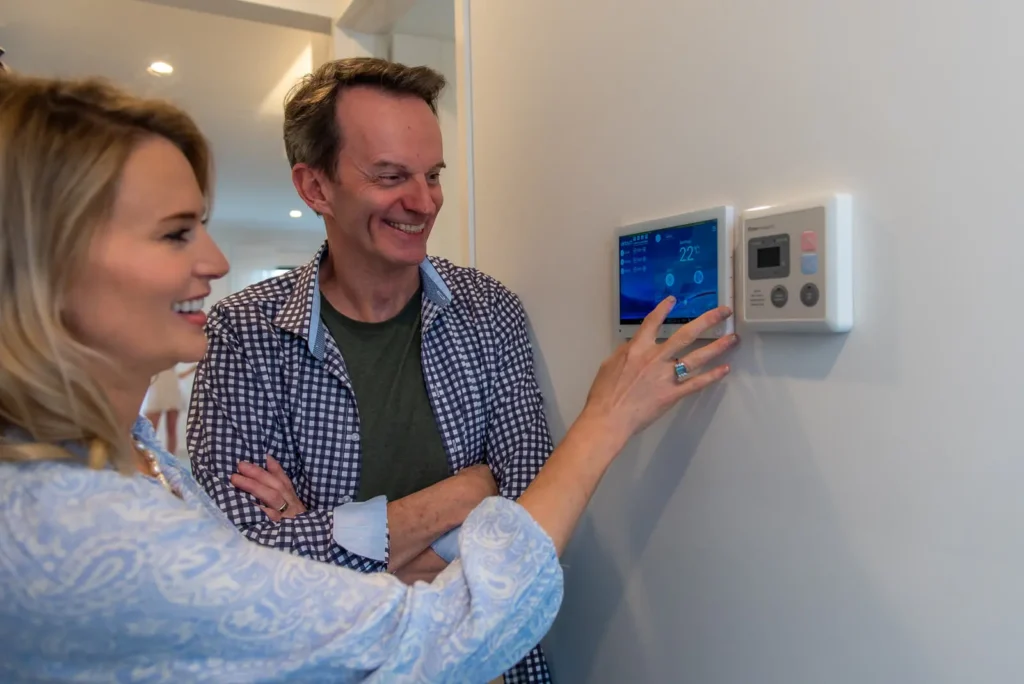
If you share your home with a partner, kids, or housemates, airflow preferences can vary widely. Zoning is a great solution to this.
If you have a specific temperature preference, instead of cooling the whole house to one setting, you can cool only the bedrooms or the lounge before you go to bed, and even fine‑tune each room individually.
This means there should be no more arguments over the remote, overall reduced energy use, and the peace of mind that everyone gets the sleep environment that suits them.
Combining zoning and sleep mode is a powerful and clever way to enhance your comfort and efficiency.
Tip 3: Avoid Direct Air Flow
Cool air should circulate around you, not blow on you. According to the ABC, direct airflow can dry out your throat, eyes and sinuses due to decreased humidity, leaving you feeling groggy.
A quick airflow check:
- Ducted: Angle diffusers so air spreads across the room, not straight at the bed.
- Wall split: Use the swing function or manually adjust the vent downward and away from your head.
Think of your air con like gentle background climate control, not a wind machine or a freezer fan.
Tip 4: Keep Your Filters Clean
Dirty filters restrict airflow, introduce dust into the room and force your system to work harder. So, clean filters mean cleaner air, and smoother, quieter operation, which is exactly what you want overnight.
A good rule of thumb is to clean your air conditioner filter every 6 months, or more often if you have pets, allergies, or live in a dusty area.
It’s a small job that massively affects comfort.
Tip 5: Use Your Air Conditioning to Reduce Humidity on Sticky Nights
Perth can be dry most of the year, but we still get humid bursts, especially in late summer and during storms. Humidity makes your home feel warmer than it is, which interferes with sleep quality.
Most reverse cycle air conditioners naturally dehumidify as they cool, creating a more comfortable, crisp sleeping environment. If your system has a specific dry or dehumidify mode, use it during muggy evenings before switching to your normal cooling mode.

Tip 6: Pre‑Cool Your Room Strategically
Instead of blasting cold air right before bed, try turning on your air conditioner earlier in the evening to pre‑cool your bedroom. This gives your room time to reach a steady, comfortable temperature without the late-night rush of cold air and noise.
You can run the air con for 30–60 minutes before bed, then switch to sleep mode for the night or set a schedule timer through your aircon controller or Wi‑Fi app.
This way, your room stays consistently cool without overworking the system.
Tip 7: Consider Upgrading to a Quieter, More Efficient System with Ford & Doonan
If your air con rattles, buzzes, or constantly turns on/off at night, it may be worth upgrading. Modern systems are significantly quieter than older systems and hold steady temperatures far better. Features like variable-speed inverters, improved acoustic design and smarter sensors make a big difference to nighttime comfort.
A quieter system can genuinely improve your sleep quality and your power bills.

Sleep Better and Feel Better, With a Little Help From Your Air Conditioner
Creating the perfect sleep environment doesn’t mean overcooling your bedroom or running your air con all night at full blast. It’s about using smart settings, zoning, and consistent temperature control to support how your body naturally prepares for rest.
With the right setup, your air conditioner becomes more than a comfort tool; it becomes part of a healthier bedtime routine.
If you’d like help fine‑tuning the sleep comfort in your home or exploring upgrades, zoning options or quieter systems, the Ford & Doonan team is always here to help.
 1800 AIR CON
